Jakarta, SAWIT INDONESIA – The National Research and Innovation Agency (BRIN) is strengthening the development of research-based innovations to address the threat of Ganoderma disease in Indonesia’s national oil palm plantations.
Chairman of BRIN’s Research Organization for Agriculture and Food, Puji Lestari, emphasized that oil palm remains a strategic national commodity supporting economic, social, and environmental sectors.
“The palm oil sector currently provides livelihoods for more than 16.2 million families in Indonesia. Therefore, the sustainability of its production must continue to be maintained through strengthened research and innovation,” Puji stated during the online EstCrops_Corner #26 webinar on Friday (29/5).
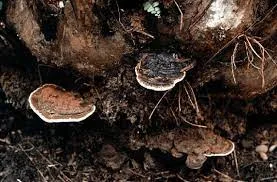
According to her, basal stem rot disease caused by Ganoderma boninense remains one of the major challenges in oil palm cultivation.
“This disease is difficult to detect in its early stages and spreads very rapidly. Therefore, more effective research- and innovation-based solutions are needed,” Puji said while opening the webinar.
“To date, there is still no oil palm variety that is completely resistant to Ganoderma attacks. Therefore, BRIN is encouraging the development of molecular-based early detection technologies as well as the utilization of microbes as biological control agents to improve disease control effectiveness while reducing dependence on synthetic chemical substances,” she continued.
Puji stressed that accelerating innovation in the palm oil sector cannot be carried out partially.
“We need to produce impactful research that provides real solutions to national problems. Collaboration is the key to accelerating the development of early detection technologies and sustainable disease management,” she emphasized.
Meanwhile, Head of BRIN’s Research Center for Plantation Crops, Setiari Marwanto, highlighted the importance of maintaining the sustainability of the palm oil industry amid national agendas supporting food and energy self-sufficiency. He noted that increasing crude palm oil (CPO) production must be accompanied by stronger, more modern, and precise plant disease mitigation systems.
“The sustainability of Indonesia’s palm oil industry still faces serious challenges, one of which is basal stem rot disease caused by Ganoderma. BRIN is currently developing various research approaches, ranging from direct pathogen control to improving oil palm resistance,” he explained.
One of the key innovations currently under development is a molecular technology-based Ganoderma detection kit, whose research began in 2025. The innovation is expected to assist seed selection processes during the early stages of Ganoderma infection.
“In addition to developing early detection kits, BRIN has also initiated breeding research since 2024 to obtain Ganoderma-tolerant oil palm varieties through collaboration with industrial partners. Strengthening tissue culture (in vitro) technology is also continuously being carried out to improve the quality and uniformity of national oil palm seeds,” he said.
On the same occasion, President Director of PT Pascal Biotech Indonesia, Miftachul Anwar, shared experiences regarding the use of microbes as bioprotection agents for mitigating basal stem rot disease in sustainable oil palm ecosystems. This approach is considered capable of maintaining soil health, improving plant resistance, and supporting more environmentally friendly cultivation practices.
The event, organized by the Research Center for Plantation Crops under BRIN’s Agriculture and Food Research Organization, served as a strategic forum bringing together researchers, academics, industry players, and stakeholders to discuss the threat of Basal Stem Rot (BSR) disease caused by Ganoderma boninense, one of the most destructive pathogens in oil palm plantations.
Through the webinar themed “Ganoderma Management Strategies Toward a Sustainable National Palm Oil Industry,” BRIN introduced various scientific approaches and advanced technologies to support the sustainability of Indonesia’s palm oil industry.
Through the implementation of EstCrops_Corner #26, BRIN hopes to strengthen cross-sector understanding regarding the threat posed by Ganoderma and the various technological innovations that can be applied in its management. The forum also serves as an important step toward accelerating research and innovation collaboration in realizing a productive, competitive, and sustainable Indonesian palm oil industry amid global food and energy challenges. (Source: BRIN)