As global markets increasingly demand sustainable palm oil, Indonesia’s 2.6 million small-scale farmers hold the key to both meeting international standards and securing the nation’s agricultural prosperity. However, without support to meet rising standards, they risk exclusion from global supply chains.
In global commodity value chains, small-scale farmers play a critical role. They contribute around 35 percent of the global food production and account for 84 percent of the total farms worldwide. Small-scale farmers are responsible for producing 70 percent of the food being consumed in low- and middle-income countries. Nonetheless, they do not dominate the sustainability story. Instead, they are on the margins, struggling to cope with the impacts of climate change due to a lack of access to information, training, and markets, which hinders their ability to improve productivity, build climate resilience, and enhance the quality of their livelihoods.
Sustainability initiatives have ignored and even failed to recognise small-scale farmers. This is despite small-scale farms being traditionally known to practice polyculture (as against monoculture by big industrial plantations) and protect biodiversity. A relatively easy indicator would be the number of small-scale farmers certified against a sustainability standard. Nearly 2 percent of small-scale farmers in low-income countries are certified.
While the demand for sustainable palm is expected to grow each year, large-scale plantations alone will not be able to fulfil it. Sustainable palm—which is compliant with a sustainability standard—accounts for only 17 percent of the overall production. The segment that needs to be included and mainstreamed to improve the share of sustainable palm globally is the small-scale farmers.
Small Farmers, Big Stakes: Where Do They Stand?
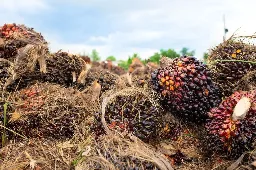
Palm oil accounts for 40 percent of the vegetable oil traded globally. It is almost ubiquitous: it can be found in instant noodles, ice creams, chocolates, cookies, packaged bread, and more. Roughly 7 million small-scale palm oil farmers are responsible for 25-30 percent of the total palm oil supply.
While its role in securing livelihoods is established, the palm oil sector is increasingly facing pressure to demonstrate environmental and social responsibility—especially as concerns over deforestation, biodiversity loss, and labour rights violations have gained global traction. The European Union Deforestation Regulation (EUDR) is set to take effect at the end of 2025. Micro and small enterprises have received an extension until May 2026. The regulation aims to encourage the consumption of deforestation-free products while addressing deforestation caused by the expansion of agricultural land. In other words, companies supplying to the European Union (EU) will have to prove that their products don’t come from deforested land. Palm oil is one of the key commodities this legislation aims to cover.
Small-scale farmers are at the risk of exclusion by default. They are bound to find it difficult to meet the regulatory requirements effectively without adequate administrative and financial support. Globally, certification is becoming the determining factor for export-readiness on the producer’s end, especially in light of regulations demanding traceability. With only about 0.3 percent of the land managed by small-scale farmerscertified against the Indonesian Sustainable Palm Oil (ISPO) standard, small-scale farmers growing palm are looking at an uncertain future.
Indonesia’s Readiness
With the global palm oil market valued at USD 10.8 billion in 2024 and projected to reach USD 13.6 billion by 2033 (IMARCH Group), the industry faces mounting pressure to prove its sustainability credentials while maintaining Indonesia’s position as the world’s largest palm oil producer. At the heart of this transformation lies an oft-overlooked but crucial demographic: Indonesia’s small-scale farmers.
These farmers, who cultivate plots typically smaller than 25 hectares, represent more than half of Indonesia’s total palm oil plantation area. They represent approximately 40 percent of the total area for oil palm production. It is critical to poverty alleviation and corroborates why many small farmers have transitioned from growing rubber to palm in the past two decades. Simultaneously, the footprint of small-scale farmer-managed plantations in Indonesia has expanded from 1.6 million hectares in 2001 to 5.8 million hectares by 2018. Yet their potential remains largely untapped, and the disconnect between scale and certification represents both Indonesia’s greatest challenge and its most promising opportunity in the global palm oil market.
(Selengkapnya dapat dibaca di Majalah Sawit Indonesia, Edisi 166)