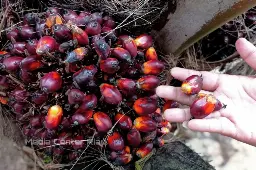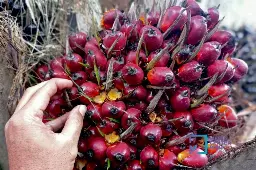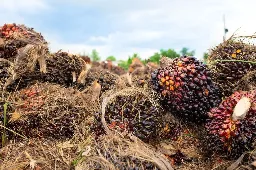
Unilever is using biomethane made from palm oil waste to help lower emissions at our facility in Indonesia. Discover how we’re working to grow our business more sustainably and inspire positive change in the palm oil industry.
To make our palm oil supply chain more transparent and traceable, and help maintain ‘no deforestation’ for this key commodity, Unilever is working directly with producers and mills, bypassing traditional intermediaries and bringing much of our palm oil refining in-house.
To help ensure that more of the palm-derived ingredients that create lather in many of our global products are made this way, we’ve recently expanded Unilever Oleochemical Indonesia (UOI), our palm oil processing facility in Sei Mangkei, North Sumatra.
The challenge has been that following this expansion, UOI is now the largest greenhouse gas (GHG) emitting site in Unilever’s global operations. To meet our target of reducing our global Scope 1 and 2 emissions by 100% by 2030 (vs 2015), we need to act decisively to address the impact.
That’s why we’re shifting towards thermal renewable energy. In a market where fossil-based energy is still abundant, renewable energy opportunities are currently minimal – but corporates can help drive the clean energy transition. In the first commercial offtake of biomethane in Indonesia, Unilever has started replacing the natural gas we have been using at UOI with biomethane, created from palm oil effluent from local mills.
Expanding UOI is a key part of our strategy for growing our business, and we’ve invested heavily in the facility over the last decade. We’re determined to ensure this growth does not come at the cost of our ability to deliver on our Scope 1 and 2 climate target.
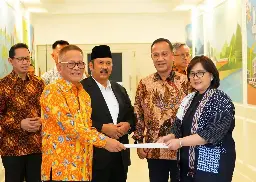
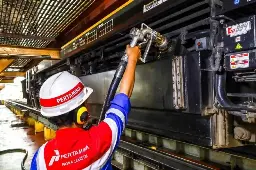
Partnering with KIS Group, a leading biogas provider in Asia, we’ve worked to secure biomethane supplies for the facility. Together, we’re sourcing biomethane from two nearby mills that are included in our sustainable palm oil development programme and are compliant with our People and Nature policy, KIS is transporting the compressed biomethane (bioCNG) to UOI using trucks that run on the bioCNG themselves.
Unilever will be expanding our partnership to a third mill by the end of 2025 and have plans in place to source biomethane from six additional mills, which adhere to our sustainability expectations, over the next two years.
Our partnership is part of a cost-effective and resilient route to decarbonisation at the facility. As we continue to scale up biomethane and sustainably sourced biomass at UOI, as part of our global strategy to leverage these energy sources to decarbonise Unilever operations, we will move closer to achieving our Scope 1 and 2 goal. We expect to source over 800,000 MMBtu/annum of biomethane at UOI, to meet almost a quarter of its energy needs by 2030. “When expanding our operations, we must be doing it sustainably. By partnering with KIS, we’ve been able to innovate a solution that will cost-effectively lower our emissions as we continue to grow,” says Saikrishna Devarakonda, Managing Director of UOI.