The European Union has officially deferred the implementation of the European Union Deforestation-free Regulation (EUDR) to 30 December 2025 for large companies and 30 June 2026 for small enterprises.
Indonesia has been highlighting the issues with the EUDR for over a year, and some of our concerns have been acknowledged. Now, it is our responsibility to address our internal challenges, while simultaneously strengthening the international cooperation framework and developing guidance for those in the supply chain.
The delay will allow the producing countries, notably Indonesia to address prevailing issues, such as the integrity of export commodity data, limitations of traceability systems, transparency on geo-location data, administrative processes and non-competitive export costs.
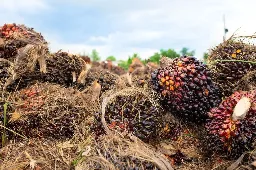
The EUDR when fully enforced will directly affect access to EU market of seven products originated from both the third world and developed countries, namely timber, cattle, palm oil, rubber, coffee, cocoa and soy.There are five commodities exported by Indonesia that will be affected by the EUDR, notably, palm oil, timber, rubber, cocoa and coffee. However, due to its significance of export values and economic impacts to the country, the Indonesian palm oil will be the hardest hit.
Such delay comes just at an auspicious time when Indonesia has just had a new government under the president-elect. As a common practice in the country, the new president has always set up a kick-start milestones priority target of the first 100 days in office.
In his first 100 days as President, Prabowo needs to capitalize on the delay of EUDR implementation as an opportunity to ensure the country’s preparedness in meeting the EUDR’s requirements while simultaneously continue to closely work with the EU policy makers to build consensus on mutually beneficial free and fair trade, notably engagement and consultation in preparation of implementing laws under the European Green Deal commitment.
During the first 100 days, the president will have a chance to lay down the ideal groundwork to address potential negative impact of the EUDR and European Green Dealto reduce carbon emission and mitigate the climate change.
On the foreign relations and international trade, the new president needs to bolster international alliances among both developing and developed producer countries, advocating free and fair trade to safeguard the market access of the products, while campaigning against unilateral regulations that are burdensome and inconsistent with both Indonesian and international law.
President Prabowo needs to take lead on a number of key international fronts, such as strengthening the Council of Oil Palm Producing Countries (CPOPC) as an advocate for international forum between developing countries in the Global South and developed countries to better manage what is called a rule-based international order, including WTO roles.
The government need to work with allies and forge international alliances, including with EUcountries to address the practical challenges associated with the EUDR’s implementation and also the European Green Deal to prevent market uncertainties and avoid supply chain disruptions.
Domestically, President Prabowo is urged to issue clear directives and urgently assign concerned ministers overseeing plantation commodities, wood and paper products, international trade and state revenues from export activities, to carry out priority programs during its first 100 days milestones. There are four strategies to be undertaken to improving infrastructure and access of export, expand international market share and enhancing sustainability credentials of the Indonesian products to meet market standards, notably EUDR.
Firstly, improving export commodity data in the Technical Ministries and Regional Governments, especially the origin of plants whose harvests are processed into export products. Improving this data will facilitate the provision of technical assistance and funding to millions of farmers and smallholders, as well as being able to provide information on the origin of these export products, which are currently a requirement in global trade.
Secondly, building a robust traceability system for export products. Thegovernment’s initiative to introduce the National Commodity Dashboard to locate the five commodities affected by the EUDR, namely palm oil, coffee, cocoa, rubber and timber to their origins must be accelerated. In addressing the challenges of smallholders’ compliance with EUDR, it is imperative for the government and large companies to help small farmers build capability in providing geo-location and legality data to be registered to the dashboard.
The government needs to solve the prevailing issues encountered in the Dashboard development pertaining to contradictory regulations on data transparency and confidentiality. The perceived prohibition of sharing of the geo-location data stipulated in a number of national regulations needs to be addressed as it is the core of traceability requirements of EUDR and other no deforestation standard assurances.
Thirdly, facilitating export activities by simplifying the registration process, data collection and payment process, when Indonesian products are ready to be exported both at ports and airports.This can be done through coherent policy framework and well-coordinated works among all export-concerned agencies, while cutting the red-tapes.
Lastly, reducing the costs imposed on export products in order to maintain the competitiveness of Indonesian products in the global market. Indonesia has notoriously imposed regulations that create a high-cost economy, in the name of price stability, but principally will worsen our poor credibility of the regulatory environment and business climate.
Although Indonesia is a competitive exporting nation, we still have a lot of work to do to achieve the goal of 8% growth. We anticipate that President Prabowo's leadership in addressing the EUDR and the European Green Deal both domestically and internationally will result in a more just, prosperous and equitable Indonesia as well fair and free trade as a just global order and equitable access of resource and market.(*)